About
Vilas Dhar
President, Patrick J. McGovern Foundation · AI Governance · Public Purpose
Vilas Dhar is an institutional leader working at the intersection of AI governance, statecraft, and public purpose. He is President of the Patrick J. McGovern Foundation, a $1.5 billion philanthropy advancing AI for public purpose. He has served on the UN Secretary-General's High-Level Advisory Body on AI and is the U.S. Government's nominated expert to the Global Partnership on AI.
In His Own Words
My grandfather had a third-grade education. He lived in an open-air home in Agrahara, a small village in rural India, without electricity or running water. He cooked meals for families across the village on a wood-fired stove. And he became, without any title or appointment, the person his community turned to for justice: settling disputes, advocating for neighbors, holding local power to account. He did this into his nineties.
I grew up in Illinois, but spent long stretches in India as a kid. In Agrahara, I watched my grandfather build trust and solve problems with nothing but relationships and moral clarity. Back home, I was running through one of the country's national supercomputing centers, pestering researchers, trying to understand what these enormous machines were for. Those two experiences never quite fit together in my mind: my grandfather's village and the supercomputers, the warmth of his stove and the hum of those servers. But the tension between them gave me something I've never lost: a deep curiosity about what happens when powerful tools meet the communities they're supposed to serve.
I studied computer science and biomedical engineering at the University of Illinois, then law at NYU, then public policy at Harvard's Kennedy School. Every turn was another angle on the same question: how do you design systems, legal, technical, institutional, that actually work for people? I practiced law. I founded a public interest law firm and built one of the country's first nonprofit incubators. In each case I was trying to close the distance between the institutions that existed and the ones communities needed.
The Patrick J. McGovern Foundation gave me the platform to work on that question at scale. We're a $1.5 billion philanthropy, and we've committed more than $500 million to AI for public purpose, supporting the organizations, researchers, and institutions building the governance infrastructure that markets won't create on their own. I think of this work as building the civic layer of AI: the standards, the oversight mechanisms, the democratic processes, the public institutions that ensure the people affected by AI systems participate in their design and governance.
I've brought that same conviction into international policy. As a member of the United Nations Secretary-General's High-Level Advisory Body on AI, I helped develop recommendations that led 193 countries to agree on new institutions for AI governance. As the U.S. Government's nominated expert to the Global Partnership on AI, I spend my time on the unglamorous work of building institutional capacity: the kind of infrastructure nobody holds a press conference for but everybody depends on. I advise Stanford's Institute for Human-Centered AI, serve on the OECD's Expert Working Group on AI Futures, and chair the Center for Trustworthy Technology. I sit on boards and serve as trustee for organizations working across philanthropy, education, and financial services.
A few convictions run through everything I do. AI should be governed as civic infrastructure, with the same obligations we attach to water systems, public health, and transportation. We need institutional imagination: the willingness to design governance structures that don't yet exist, and to take that work as seriously as we take building models. Philanthropy has to stop sitting on the sidelines and start building the governance architecture that markets will never create on their own. The future of work is a choice we are making right now, whether we recognize it or not. We decide whether AI strengthens human capability or replaces it. The technology doesn't have a preference. We should.
I write about these ideas in TIME, Nature, the Financial Times, the Wall Street Journal, the Boston Globe, and the Indian Express. My LinkedIn Learning course, Ethics in the Age of Generative AI, has reached more than 700,000 learners in six languages. I speak at the World Economic Forum in Davos, the United Nations General Assembly, the Aspen Ideas Festival, and in rooms where the rules for AI are being written.
I keep coming back to the work closest to where my grandfather stood. Farmers in rural India deciding how apps fit into generations of agricultural knowledge. Health workers in Rajasthan using data platforms they helped design. Journalists in local newsrooms using AI to hold institutions accountable. My grandfather understood something before any of us had language for it: when you give people authority over the systems that shape their lives, what they build is better than what gets built for them.
I believe in people. I believe we can govern change, build institutions worthy of this moment, and create futures that allow us to believe in ourselves. There is more reason for hope in that work than in anything a model can generate on its own. The hardest problems we face are human problems, and they will only be solved by people who show up to solve them.
Institutional Leadership
Patrick J. McGovern Foundation
President
UN High-Level Advisory Body on AI
Former member (appointed by UN Secretary-General to advise on AI governance and policy)
Global Partnership on AI
U.S. Government Nominated Expert
Stanford Institute for Human-Centered AI
Advisory Council Member
OECD Expert Working Group on AI Futures
Member
Center for Trustworthy Technology
Chair
MIT Solve
Advisor
WEF Global Future Council on AI
Member
Fidelity Charitable
Trustee, Audit & Investment Committees
AccessLex Institute
Board of Directors
Education
Master in Public Administration
Harvard Kennedy School of Government
Gleitsman Fellow on Social Change
Juris Doctor
New York University School of Law
BA, Biomedical Engineering
University of Illinois Urbana-Champaign
BS, Computer Science
University of Illinois Urbana-Champaign
Fellowships & Recognition
World Economic Forum Young Global Leader, 2022
Gleitsman Fellow on Social Change, Harvard University
Practitioner Resident on AI, Rockefeller Foundation Bellagio Center
Senior Fellow, Berggruen Institute
Thinkers50 Listed
Approved Bios for Press & Events
Click any bio below to expand and copy. For headshots and full media kit, visit the Contact page.
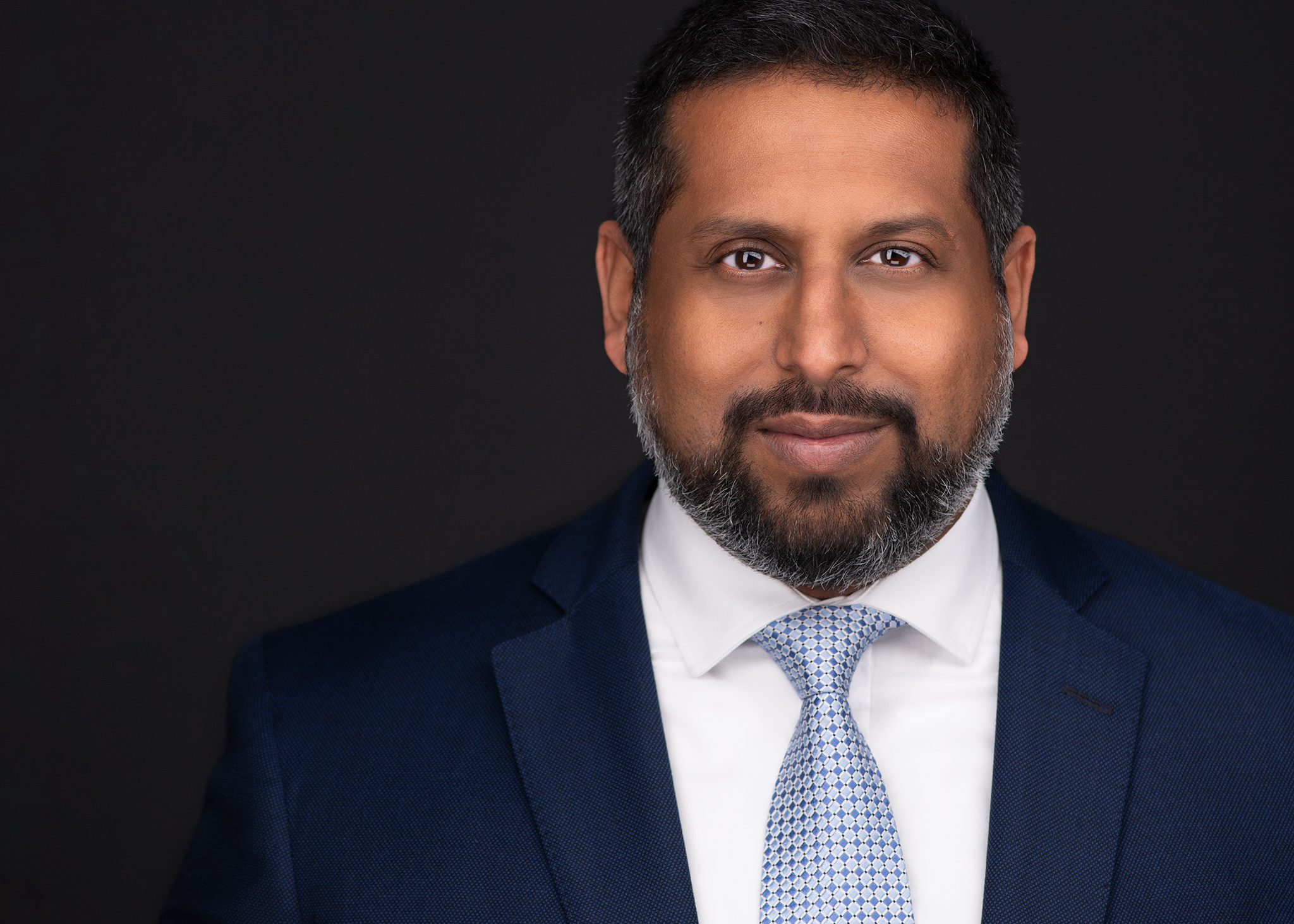
Vilas Dhar · President, Patrick J. McGovern Foundation
Quick Reference
Current Role
- President, Patrick J. McGovern Foundation
Key Affiliations
- UN High-Level Advisory Body on AI (former member)
- Global Partnership on AI (U.S. Nominated Expert)
- Stanford HAI Advisory Council
- WEF Global Future Council on AI
- OECD Expert Working Group on AI Futures
- Center for Trustworthy Technology (Chair)
- MIT Solve (Advisor)
Board Service
- Fidelity Charitable (Trustee, Audit & Investment Committees)
- AccessLex Institute (Board)
Education
- Harvard Kennedy School, MPA
- NYU School of Law, JD
- University of Illinois, BA Biomedical Engineering
- University of Illinois, BS Computer Science
Recognition
- WEF Young Global Leader, 2022
- Gleitsman Fellow, Harvard
- Practitioner Resident on AI, Bellagio Center
- Senior Fellow, Berggruen Institute
- Thinkers50 Listed
Signature Ideas
- AI as civic infrastructure
- Institutional imagination
- Philanthropy as governance builder
- The future of work as a design choice
Reach
- 45+ publications in TIME, Nature, FT, WSJ
- 700,000+ LinkedIn Learning learners, 6 languages
- 285+ speaking engagements incl. WEF, UNGA, TEDx
Interested in having Vilas speak at your event?
View speaking topics & book →